
- Rapport de marque
- English
- Sep 23 – Oct 22, 2026
Stanford University media coverage report, October 2026
From 23 September to 22 October 2026 we read 4,899 English-language news stories and public posts about Stanford and four peer universities. Stanford led with 33% of their news mentions, two points ahead of Harvard, in a month that brought it two Nobel prizes. Yet its busiest day had nothing to do with either: on 22 October three press releases naming Stanford researchers ran on more than 30 sites each, and 112 of that day's 137 mentions were press releases.
Équipe Scano ·
Libre de citer avec un lien vers cette page
- Histoires et posts
- 4,899
- actualités et réseaux, en Anglais
- Médias d’actualité
- 667
- ont parlé d’au moins une des 5 marques
- Part de Stanford dans l’actualité
- 33%
- sur les 5 mentions d’actualités des marques
- Jour le plus actif de Stanford
- Oct 22
- 137 mentions dans les actualités
Points clés
- 1Stanford took 33.0% of the five universities' news mentions: 1,455 of 4,404, from 405 outlets. Harvard was close behind with 31.0% and slightly more outlets (411), then MIT (19.9%), Yale (10.5%) and UC Berkeley (5.5%).
- 2A third of Stanford's coverage was press releases: 504 of its 1,455 news mentions carried a distribution credit, many from companies and foundations naming a Stanford researcher, adviser or study. Harvard's share was 30%, MIT's 39%.
- 3Two Nobels in one week: Karl Deisseroth for medicine on 5 October and Robert E. Hall for economics on 12 October, in 187 stories from 125 outlets. Beyond the science, the AP's story of Deisseroth making his children's school lunches that morning ran in 23 stories.
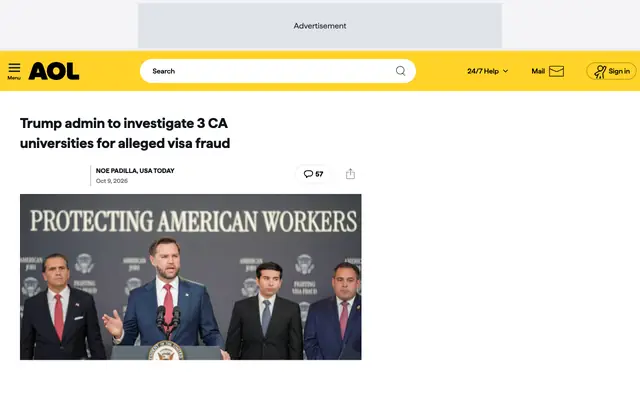
- 4On 8 October Vice President JD Vance named nine universities for a J-1 visa investigation, four of them in this report: Harvard, Yale, Stanford and MIT. It was the one story that put all four in the same headlines; UC Berkeley was not on the list.
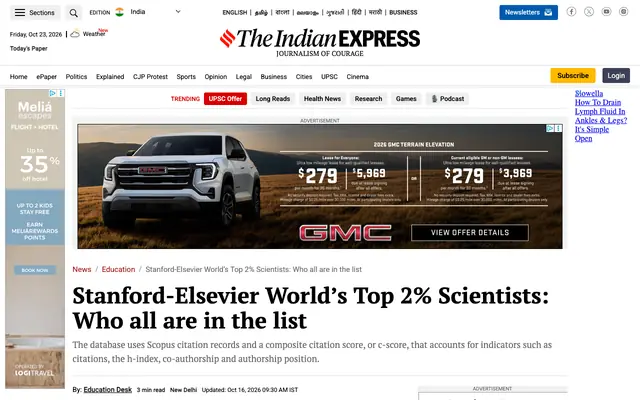
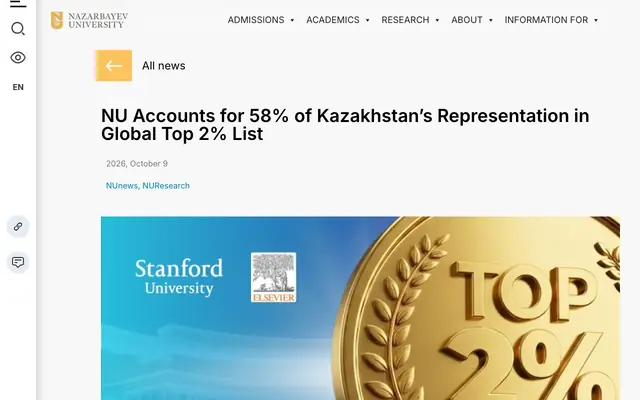
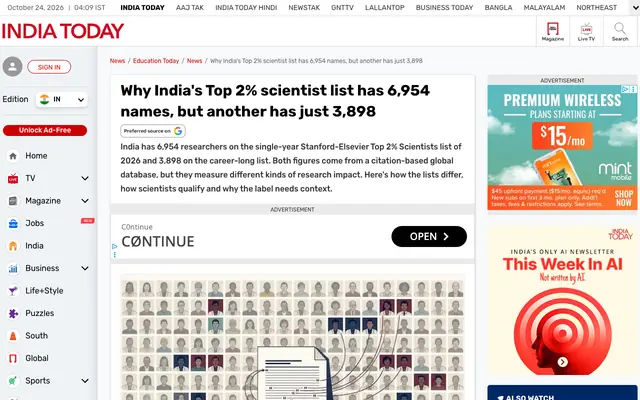
- 5Stanford's name also travels on a list: 111 stories covered the Stanford–Elsevier “Top 2% Scientists” database, mostly universities and newspapers in India, Bangladesh, Malaysia, the Gulf and Kazakhstan announcing their own researchers on it. 36 of them were one press release about a single professor.
Actualités de la période
Ce qui a fait bouger les chiffres, dans l’ordre chronologique. Les articles et posts à l’origine sont cités en Anglais, tels que publiés ; Traduire ouvre le titre dans Google Translate.
Sep 23
– Sep 27
1Sep 23 – Sep 27
An AI-altered photo and an apology
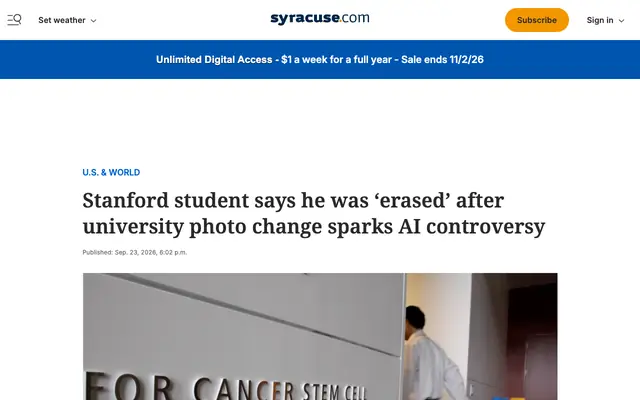
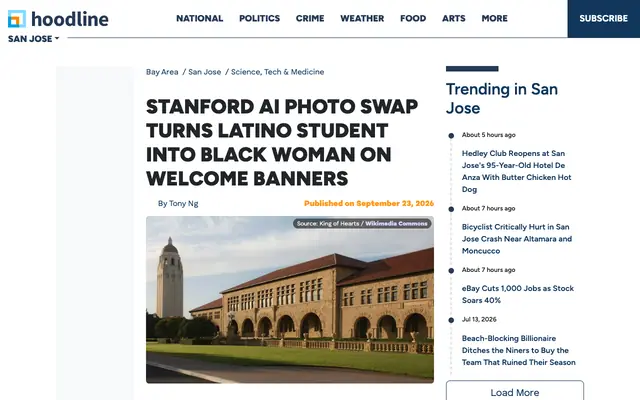
In September Stanford's Residential & Dining Enterprises used a promotional photo of three students in which generative AI had replaced a Hispanic student, senior Billy Ramirez, with a Black woman and made the other two look slimmer. The Stanford Review, the student paper, first reported it. On 23 September the university said the image violated its policy and was “a serious error in judgment”; NBC News carried the apology the next day, and Breitbart's Facebook page took it to its audience. 26 stories from 25 outlets.
Articles et posts associés
Sep 23ActualitésSyracuse.com
Stanford admits AI-altered student photo violated university policySep 23ActualitésHoodline
Stanford AI Photo Swap Turns Latino Student Into Black Woman on Welcome Banners
Sep 23
– Oct 21
2Sep 23 – Oct 21
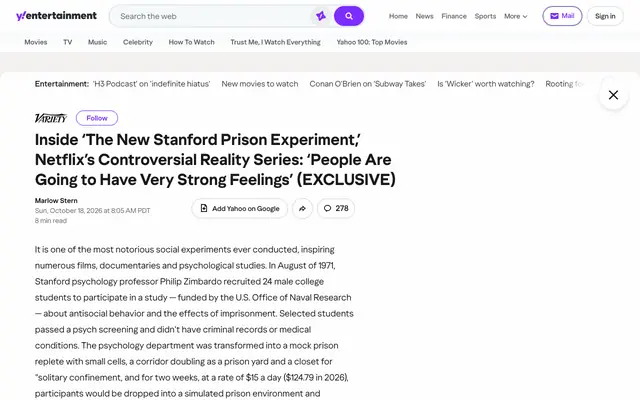
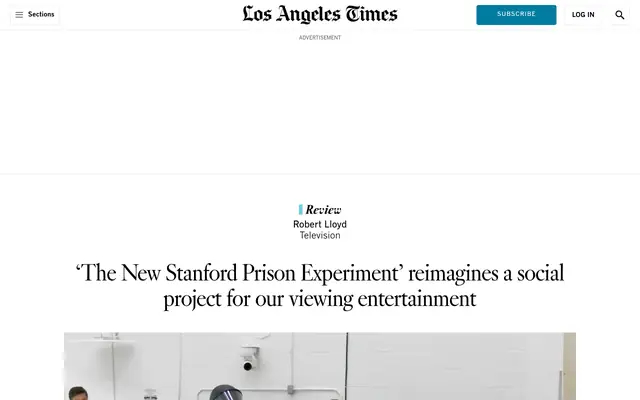
Netflix revives the Stanford Prison Experiment
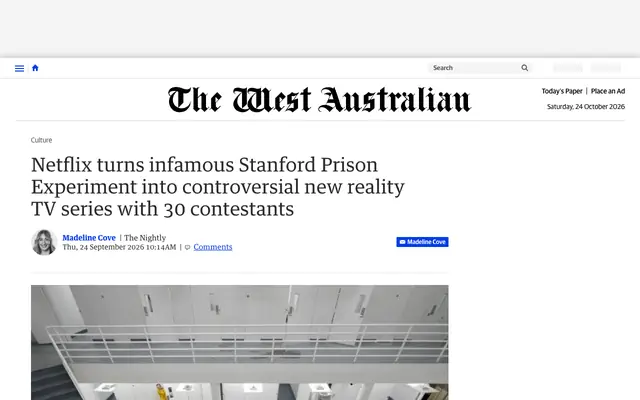
In 1971 Stanford psychologist Philip Zimbardo turned the basement of the university's psychology building into a mock prison. 55 years later Netflix is billing “The New Stanford Prison Experiment” as a modern reimagining: a six-part series that puts 30 volunteers in a real prison. The announcement ran in late September and the reviews on 21 October, with the Los Angeles Times noting that the show's “academic intentions, or pretensions, are pushed to the fore”. 30 stories from 21 outlets put Stanford's name next to a reality show.
Articles et posts associés
Sep 23ActualitésThe West Australian
Netflix turns infamous Stanford Prison Experiment into controversial new reality TV series with 30 contestantsOct 21ActualitésLos Angeles Times
'The New Stanford Prison Experiment' review: A project reimagined for TV
Oct 5
– Oct 12
3Oct 5 – Oct 12
Two Nobel prizes in one week
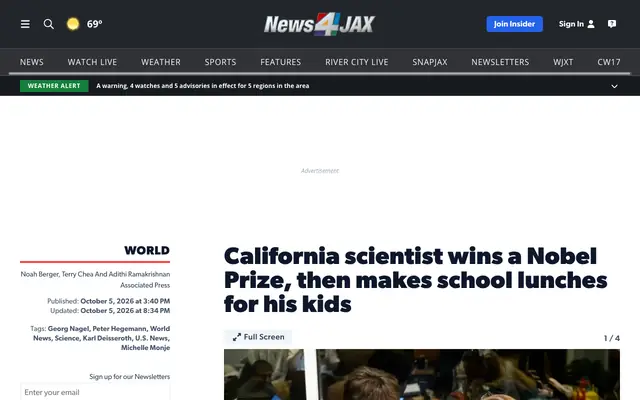
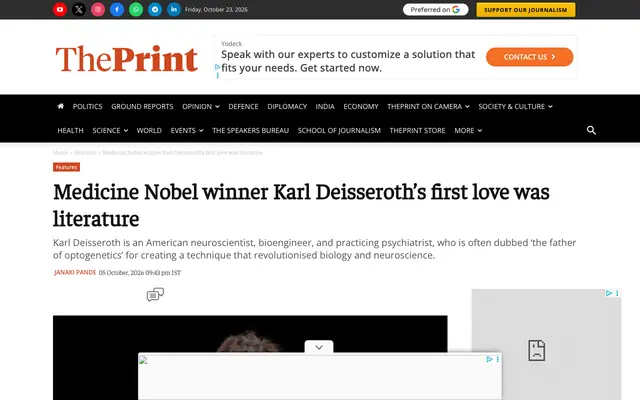
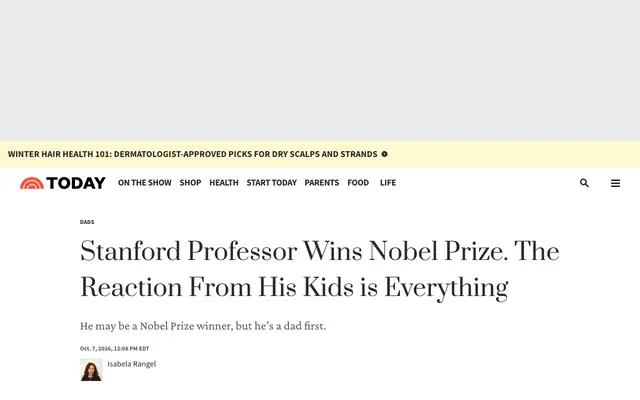
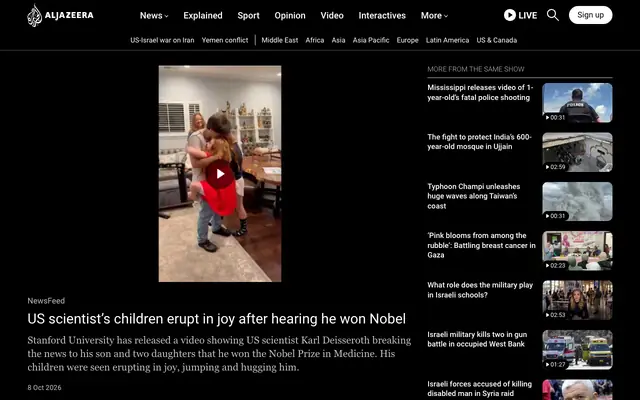
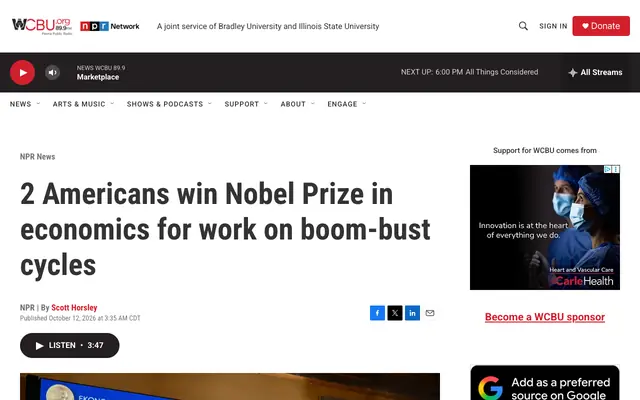
Just after midnight on 5 October the Nobel Assembly called Karl Deisseroth, a Stanford professor of bioengineering and of psychiatry and behavioral sciences, to tell him he shared the prize in physiology or medicine with two researchers in Germany for optogenetics, which uses light and genes to switch neurons on and off. The AP's account of him making his children's school lunches that morning ran in 23 stories, and Stanford's video of his children cheering reached TODAY and Al Jazeera. On 12 October Robert E. Hall of Stanford shared the economics prize with Michael Woodford of Columbia for work on smoothing boom-and-bust cycles. 187 stories from 125 outlets: 148 name Deisseroth, 41 Hall.
Afficher en tableau
Date Stanford Harvard MIT Saturday, October 3 15 8 41 Sunday, October 4 21 16 6 Monday, October 5 111 180 9 Tuesday, October 6 104 57 43 Wednesday, October 7 100 16 96 Thursday, October 8 105 53 86 Friday, October 9 52 117 20 Saturday, October 10 56 20 7 Sunday, October 11 16 14 2 Monday, October 12 52 44 24 Tuesday, October 13 24 60 67 Wednesday, October 14 71 139 73 Articles et posts associés
Oct 5ActualitésKRON4 (AP)
Stanford professor wins Nobel Prize in physiology or medicineOct 5ActualitésNews4JAX (AP)
California scientist wins a Nobel Prize, then makes school lunches for his kidsOct 5ActualitésHuffPost (AP)
California Scientist Celebrates Nobel Prize By Making His Kids' School LunchesOct 5ActualitésThePrint
Medicine Nobel winner Karl Deisseroth’s first love was literatureOct 8ActualitésAl Jazeera
US scientist’s children erupt in joy after hearing he won NobelOct 12ActualitésWCBU (NPR)
Two Americans win Nobel Prize in Economics for work on boom-bust cycles
Oct 8
– Oct 9
4Oct 8 – Oct 9
Nine universities, one visa
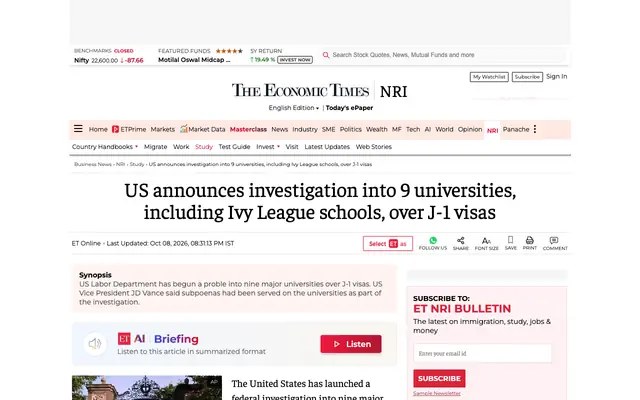
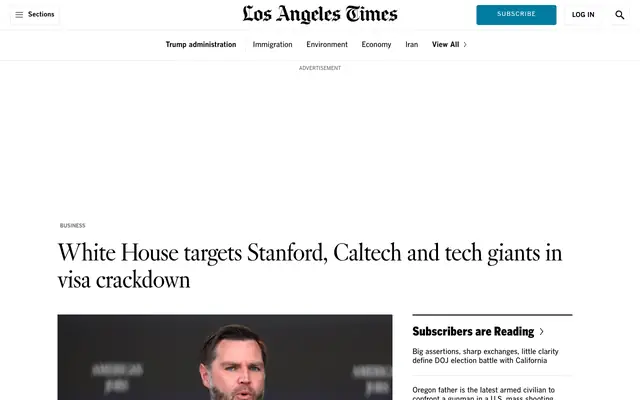
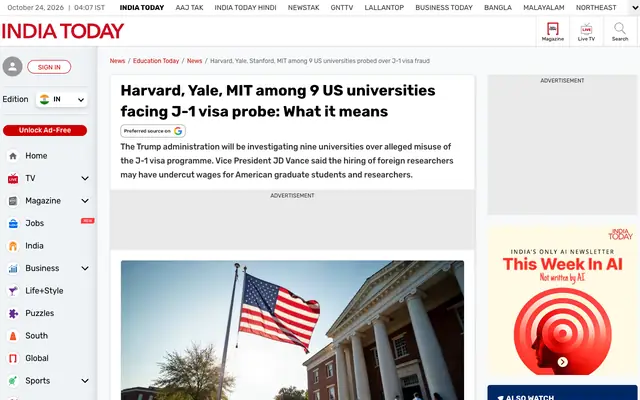
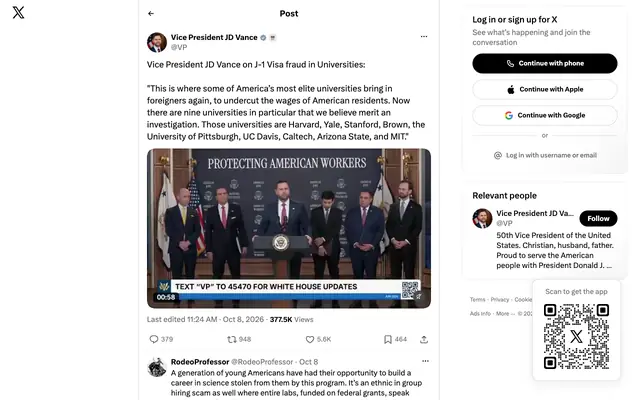
At a White House briefing on 8 October Vice President JD Vance said nine universities merited investigation over J-1 exchange-visitor visas, accusing them of bringing in foreign researchers to undercut American wages: Harvard, Yale, Stanford, Brown, the University of Pittsburgh, UC Davis, Caltech, Arizona State and MIT. Labor Department officials had served subpoenas, he said. His post on X reached 22,600 views; the Los Angeles Times set the probe beside new limits on how Microsoft, Adobe and six other tech companies sponsor skilled-worker visas. UC Berkeley, the fifth university in this report, was not named.
Heures après la première publicationTaille du point : vues et réactions Afficher en tableau
Heure (locale) Réseau Vues et réactions Oct 8, 10:58 Actualités 0 Oct 8, 11:24 X 23.7K Oct 8, 11:24 Actualités 0 Oct 8, 11:40 Actualités 0 Oct 8, 13:55 Actualités 0 Oct 8, 15:30 Actualités 0 Oct 8, 15:37 Actualités 0 Oct 8, 16:01 Actualités 0 Oct 8, 16:03 Actualités 0 Oct 8, 17:19 Actualités 0 Oct 8, 17:58 Actualités 0 Oct 8, 18:36 Actualités 0 Oct 8, 18:46 Threads 0 Oct 8, 20:49 Actualités 0 Oct 8, 22:00 Actualités 0 Oct 8, 22:33 Actualités 0 Oct 8, 23:04 Actualités 0 Oct 9, 01:53 Actualités 0 Oct 9, 02:14 Actualités 0 Oct 9, 02:28 Actualités 0 Oct 9, 03:45 Actualités 0 Oct 9, 05:00 Actualités 0 Oct 9, 10:09 Actualités 0 Oct 9, 18:27 Actualités 0 Oct 10, 04:16 Actualités 0 Oct 10, 05:31 Actualités 0 Oct 11, 07:47 Actualités 0 Oct 11, 15:46 Actualités 0 Articles et posts associés
Oct 8ActualitésThe Economic Times
US announces investigation into 9 universities, including Ivy League schools, over J-1 visasOct 8ActualitésLos Angeles Times
White House cracks down on student visas at Stanford and Caltech, as well as tech work visasOct 8ActualitésIndia Today
JD Vance announces J-1 visa probe into Harvard, Yale, Stanford, MIT and 5 others
Oct 9
– Oct 14
5Oct 9 – Oct 14
The list with Stanford's name on it
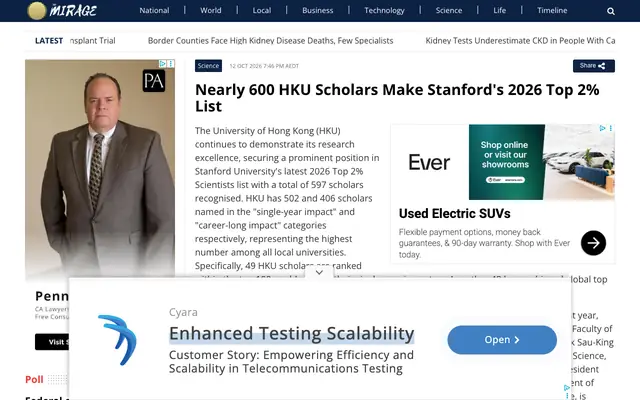
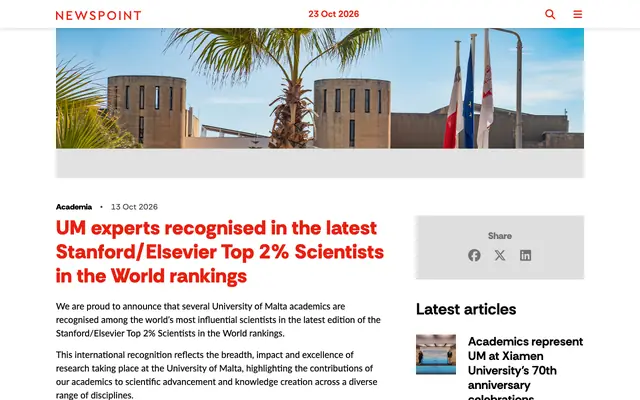
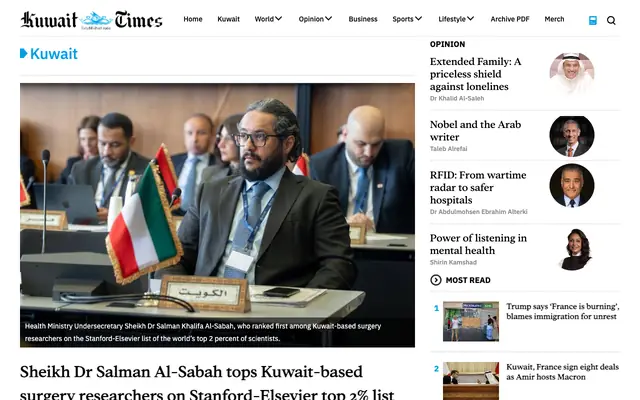
Stanford professor John Ioannidis leads a team that ranks the world's most-cited researchers across 174 subfields, in a database published by Elsevier. Its 2026 update reached the news in October, and universities announced their names on what headlines called “Stanford's list”. The Indian Express counted 3,898 Indian researchers on the career-long list, Nazarbayev University said it holds 58% of Kazakhstan's 86 places, and the University of Hong Kong had 597 scholars. In all, 111 stories from 80 outlets; 36 of them were a single press release about one professor, syndicated to 36 sites.
Articles et posts associés
Oct 9ActualitésThe Indian Express
Stanford-Elsevier World’s Top 2% Scientists: Who all are in the listOct 9ActualitésNazarbayev University
NU Accounts for 58% of Kazakhstan’s Representation in Global Top 2% ListOct 9ActualitésIndia Today
Why India's Top 2% scientist list has 6,954 names, but another has just 3,898Oct 12ActualitésMirage News
Nearly 600 HKU Scholars Make Stanford's 2026 Top 2% ListOct 13ActualitésUniversity of Malta
UM experts recognised in the latest Stanford/Elsevier Top 2% Scientists in the World rankings
Comparaison des 5 marques
Part des mentions des 5 marques dans les actualités en Anglais, et les sujets les plus abordés pour chaque marque. Uniquement les actualités, car elles sont collectées de la même façon pour chaque marque.
 Stanford33%405 médias
- Research and studies 48%
- Health and medicine 36%
- Prizes and rankings 29%
 Harvard31%411 médias
- Research and studies 36%
- Federal government 28%
- AI, tech and startups 23%
 MIT19.9%290 médias
- Research and studies 59%
- AI, tech and startups 29%
- Federal government 16%
 Yale10.5%239 médias
- Health and medicine 37%
- Research and studies 23%
- Athletics 23%
 UC Berkeley5.5%109 médias
- Research and studies 43%
- AI, tech and startups 30%
- Students and campus 23%
4,404 mentions dans les actualités au total. Un article citant deux marques compte une fois pour chacune.
Mentions dans les actualités par jour
Une ligne par marque à la même échelle, pour comparer les journées chargées entre marques.
- StanfordPic : Oct 22, 137 mentions
- HarvardPic : Oct 5, 180 mentions
- MITPic : Oct 20, 115 mentions
- YalePic : Oct 8, 70 mentions
- UC BerkeleyPic : Sep 29, 44 mentions
Afficher en tableau
| Date | Stanford | Harvard | MIT | Yale | UC Berkeley |
|---|---|---|---|---|---|
| Wednesday, September 23 | 23 | 27 | 39 | 4 | 8 |
| Thursday, September 24 | 57 | 12 | 12 | 3 | 28 |
| Friday, September 25 | 37 | 31 | 49 | 8 | 9 |
| Saturday, September 26 | 34 | 30 | 1 | 9 | 7 |
| Sunday, September 27 | 40 | 18 | 6 | 9 | 5 |
| Monday, September 28 | 13 | 14 | 11 | 5 | 4 |
| Tuesday, September 29 | 13 | 102 | 9 | 11 | 44 |
| Wednesday, September 30 | 26 | 64 | 17 | 7 | 6 |
| Thursday, October 1 | 15 | 31 | 21 | 6 | 10 |
| Friday, October 2 | 56 | 78 | 23 | 20 | 13 |
| Saturday, October 3 | 15 | 8 | 41 | 48 | 2 |
| Sunday, October 4 | 21 | 16 | 6 | 8 | 5 |
| Monday, October 5 | 111 | 180 | 9 | 10 | 11 |
| Tuesday, October 6 | 104 | 57 | 43 | 15 | 1 |
| Wednesday, October 7 | 100 | 16 | 96 | 4 | 6 |
| Thursday, October 8 | 105 | 53 | 86 | 70 | 5 |
| Friday, October 9 | 52 | 117 | 20 | 43 | 4 |
| Saturday, October 10 | 56 | 20 | 7 | 17 | 3 |
| Sunday, October 11 | 16 | 14 | 2 | 7 | 4 |
| Monday, October 12 | 52 | 44 | 24 | 44 | 1 |
| Tuesday, October 13 | 24 | 60 | 67 | 15 | 3 |
| Wednesday, October 14 | 71 | 139 | 73 | 12 | 5 |
| Thursday, October 15 | 64 | 22 | 26 | 10 | 14 |
| Friday, October 16 | 40 | 22 | 8 | 13 | 5 |
| Saturday, October 17 | 18 | 11 | 5 | 7 | 4 |
| Sunday, October 18 | 25 | 12 | 13 | 13 | 2 |
| Monday, October 19 | 23 | 17 | 12 | 17 | 3 |
| Tuesday, October 20 | 38 | 14 | 115 | 16 | 19 |
| Wednesday, October 21 | 69 | 85 | 15 | 4 | 5 |
| Thursday, October 22 | 137 | 52 | 21 | 8 | 7 |
Stanford en détail
Origine du volume de Stanford, entre actualités et réseaux sociaux.
- 35%
- of Stanford's news mentions were press releases
- 504 of 1,455; Harvard 30%, MIT 39%
- 187
- stories about Stanford's two Nobel prizes
- 148 name Deisseroth, 41 Hall
- 111
- stories about the Stanford–Elsevier Top 2% list
- 36 of them one press release
- 21%
- of Stanford's news mentions are about its teams
- Harvard 10%, MIT 1%
Notre méthode
Scope: every English-language news story and public post Scano collected from 23 September to 22 October 2026 that names Stanford, Harvard, MIT, Yale or UC Berkeley. A news story counts when the university is in its headline or opening lines, or is named at least three times. Homonyms were removed (New Zealand's education minister Erica Stanford, Stanford Advanced Materials, Hyster-Yale, the Yale Club), as were pages that carry the name only in a sidebar of other headlines; “MIT” is matched in capitals only, and “Berkeley” only as the university.
Share of voice uses news only, because news is collected the same way for every university. Social posts are collected unevenly, so they are shown for scale and never compared. Press releases count like any other story; we identify them by their distribution credit (PR Newswire, Business Wire, GlobeNewswire and others).
Les contenus sont cités en Anglais, tels que publiés ; ce rapport ne traduit ni ne reformule rien. Traduire ouvre le titre dans Google Translate, dont la traduction n’engage que cet outil.
Vues, likes et partages sont relevés à la collecte. Une mention est datée selon l’heure de publication dans le fuseau du marché.
Période : September 23, 2026 – October 22, 2026, heure locale.
Autres éditions
 Rapport de marque · English · Oct 27 – Nov 10, 2026D-Wave media coverage report, Q3 results 2026D-Wave : 34.9% de la couverture médiatiqueLire le rapport
 Rapport de recherche · English · Aug 10 – Nov 10, 2026How Scano Surfaces NVIDIA's PR IntelligencePDF · 17 pagesLire le rapport
 Rapport de marque · English · Oct 1 – Oct 31, 2026OpenAI media coverage report, October 2026OpenAI : 44.3% de la couverture médiatiqueLire le rapport
 Rapport de marque · English · Oct 1 – Oct 31, 2026Tesla media coverage report, October 2026Tesla : 70.2% de la couverture médiatiqueLire le rapport
 Rapport de marque · English · Sep 23 – Oct 22, 2026Starbucks media coverage report, October 2026Starbucks : 69.2% de la couverture médiatiqueLire le rapport
 Rapport de marque · Turkish · Sep 8 – Oct 7, 2026BİM and Türkiye's grocery chains, September 2026BİM : 48.6% de la couverture médiatiqueLire le rapport
 Rapport de marché · Kazakhstan · Sep 1 – Sep 30, 2026Kazakhstan, September 202635.7% en kazakhLire le rapport
Lisez chaque marché dans sa langue
Scano collecte les actualités et les publications publiques en plus de 20 langues et montre qui détient l’histoire de votre marque, quelques minutes après sa parution.
Demander une démo